

Your Thoughts Aren't Yours
They Published the Playbook | Mind Control Series: Part III

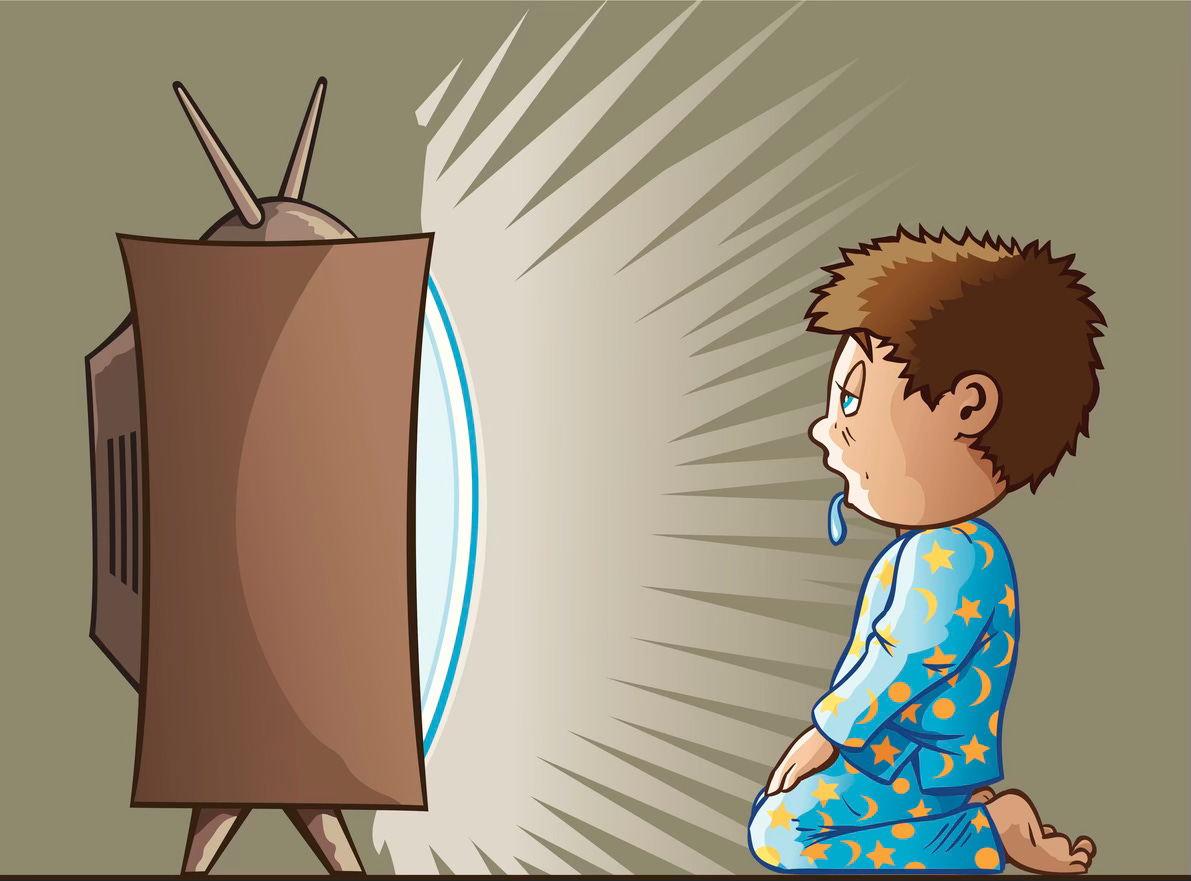
In the introduction to this series, I introduced you to Napoleon Hill’s concept of drift - the idea that 98% of people surrender their capacity for independent thought, floating through life pulled by whatever current is strongest. A deep sleep we are prone to falling into as we drifting from distraction to distraction. In Part I, I explored the ancestral scripts buried deep in your psyche - ancient patterns of fear and obedience to authority that can be activated without your awareness. In Part II, I showed you the Milgram experiments. Not the version you learned in school, but the full picture: seventeen variations, the finding that visible disobedience drops compliance from 65% to 10%, and the reason they needed you isolated.
The mass manipulation of our society is not accidental. It is not organic. It is not the inevitable byproduct of modern life. For nearly a century, well-funded researchers have studied exactly how to bypass your critical thinking and implant ideas directly into your subconscious. They published their findings in academic journals. They refined their techniques through decades of experimentation. They built the infrastructure to deliver programming at scale. And they told us what they were doing - in books, in academic papers, in congressional testimony.
People will call this conspiracy theory. That’s the tell. The word exists to stop you from checking. Because if you checked, you’d find it was never hidden. It was published. Exposed. Exposed. Exposed. Academic journals. Congressional testimony. Foundation archives.
They just bet you wouldn’t read any of it.
They won that bet.
This article is about the architecture of your thoughts. By the end, you will understand why you think what you think.
And you will never watch a screen the same way again.
Thirty Seconds
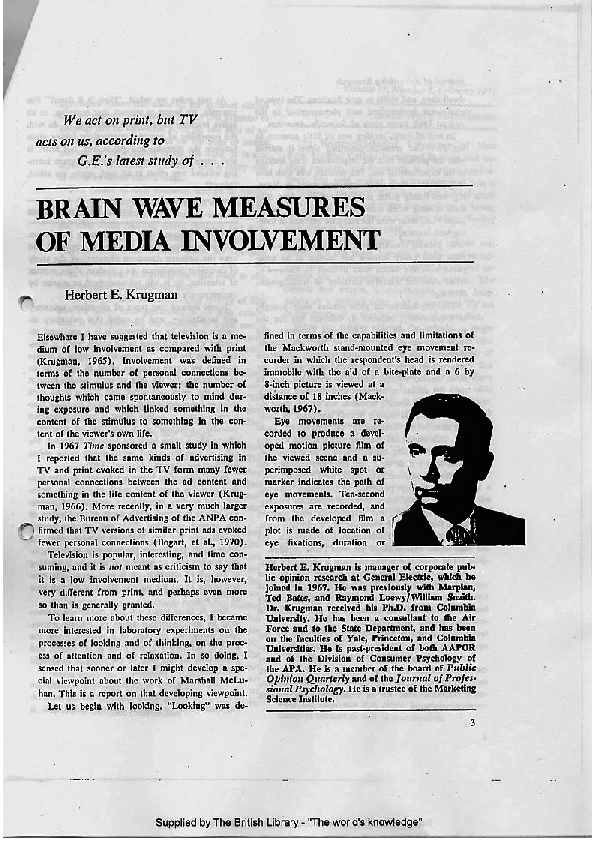
In 1969, a researcher named Herbert Krugman conducted an experiment that would quietly transform the advertising industry and change the way corporations understood the human mind. Krugman wasn’t an academic pursuing knowledge for its own sake. He was the manager of public-opinion research at General Electric - corporate, applied, focused on one question: how do you influence consumers? He wanted to know what actually happens inside the human brain when it watches television. Not what people say they’re thinking. Not what they report feeling. What is physically, measurably occurring in the brain itself.
The setup was simple. He attached an electrode to the back of a subject’s head, connected it to monitoring equipment, turned on the television, and watched her brainwaves.
What he found changed everything.
Within thirty seconds of watching television, the subject’s brainwaves shifted. They moved from predominantly Beta waves - the pattern associated with alert, focused, analytical thinking - to predominantly Alpha and Theta waves. Alpha is the brainwave state associated with relaxation and daydreaming. Theta is even deeper - the state your brain enters just before sleep, during hypnosis, or in deep meditation. Neither is the state in which you critically evaluate information. Both are states in which information flows in unopposed.
This is why you should never fall asleep with the television on. Your conscious mind checks out. The screen doesn’t. It keeps transmitting. And something in you keeps receiving.
The news is the worst. It doesn’t even pretend to be entertainment.
When the subject stopped watching television and picked up a magazine, her brainwaves immediately returned to Beta. Alert. Analytical. Critical thinking restored. Back to the television - Alpha and Theta within thirty seconds. Back to print - Beta. The pattern was remarkably consistent. Something about the radiant light of the television screen, the flickering images, the passive reception of electronic media, causes the brain to downshift into a receptive, uncritical state where the analytical mind goes quiet.
Krugman published his findings in the Journal of Advertising Research in 1971 under the clinical title “Brain Wave Measures of Media Involvement.” The title was sterile. The implications were explosive.
Nearly fifty years later, researchers decided to see if Krugman’s findings still held up. They used modern brain-scanning technology - 256 channels instead of Krugman’s single electrode - and ran the experiment again. Same design. Different era. Far more sophisticated equipment.
The results were identical.
The brainwave patterns Krugman documented in 1969 showed up again in 2018. Television still shifts the brain from active analytical processing into passive reception. And the researchers noticed something else: by the third time a person saw an advertisement, their brain showed almost no difference in response between ads. It didn’t matter what was being sold. The mind had simply settled into a uniform state of receptivity. Open. Uncritical. Ready to receive.
Fifty years of technological change. Fifty years of new research methods. The same result. The brain responds to the medium itself, not the content. It doesn’t matter what you’re watching - news, entertainment, advertisements, political speeches. Your brain enters the same receptive state regardless of what appears on the screen.
The key phrase from Krugman’s research, the phrase that the advertising industry seized upon and built an empire around, was this:
Television transmits “information not thought about at the time of exposure.”
Sit with that for a moment.
The information goes in. You don’t think about it at the time. You don’t analyze whether it’s true or false, helpful or harmful, yours or someone else’s. It simply enters your mind and takes up residence there. And it stays.
It is installed like a computer program.
While you were in Alpha.
While your critical faculties were suspended. While you sat passively in front of a glowing screen believing you were simply relaxing. And it doesn't disappear. It waits.
Later - when you encounter a store display, a product online, or find yourself in a situation similar to one you saw in an advertisement, or see a name on a ballot - something activates. Associations flood in. Feelings arise. Preferences emerge. You don't remember learning any of it. You don't know where the ideas came from. They feel like your own thoughts.
As former advertising executive Jerry Mander documented, dozens of agencies launched their own research into the television-brain phenomenon. They had discovered something profound: you don’t have to convince someone of anything. You don’t have to make logical arguments. You don’t have to overcome objections or address counterpoints.
You just have to get them in front of a screen.
Thirty seconds later, the door is open.
Krugman was not working alone. He was part of a much larger project.
Beginning in the late 1930s, the Rockefeller Foundation became the principal funder of research into mass communication and persuasion. Their flagship effort was the Princeton Radio Project, which studied how radio could be used to influence public opinion. The project was led by researchers who would go on to shape the industry - including Frank Stanton, who later became president of CBS.
When Orson Welles’ War of the Worlds broadcast triggered mass panic in 1938, the Foundation didn’t see a crisis. They saw an opportunity. Internal documents described the public’s reaction as “an almost unparalleled source of data” for understanding how people fall prey to propaganda.
Today, the average American spends over seven hours per day on screens. The device is in your pocket when you wake, in your hand while you eat, glowing beside your bed as you fall asleep. You check it before your feet hit the floor. You check it reflexively, compulsively - often without knowing why.
And unlike Krugman’s television, this screen knows you. It learns what captures your attention, what triggers your emotions, what keeps you scrolling. It doesn’t broadcast the same content to everyone. It constructs a personalized stream designed to hold you in that receptive, uncritical Alpha state for as long as possible - because your attention is the product.
Krugman discovered how the door opens. But someone else had already figured out what to do once you're inside…
